

Glory Hole
By Naomi Blythe Gold
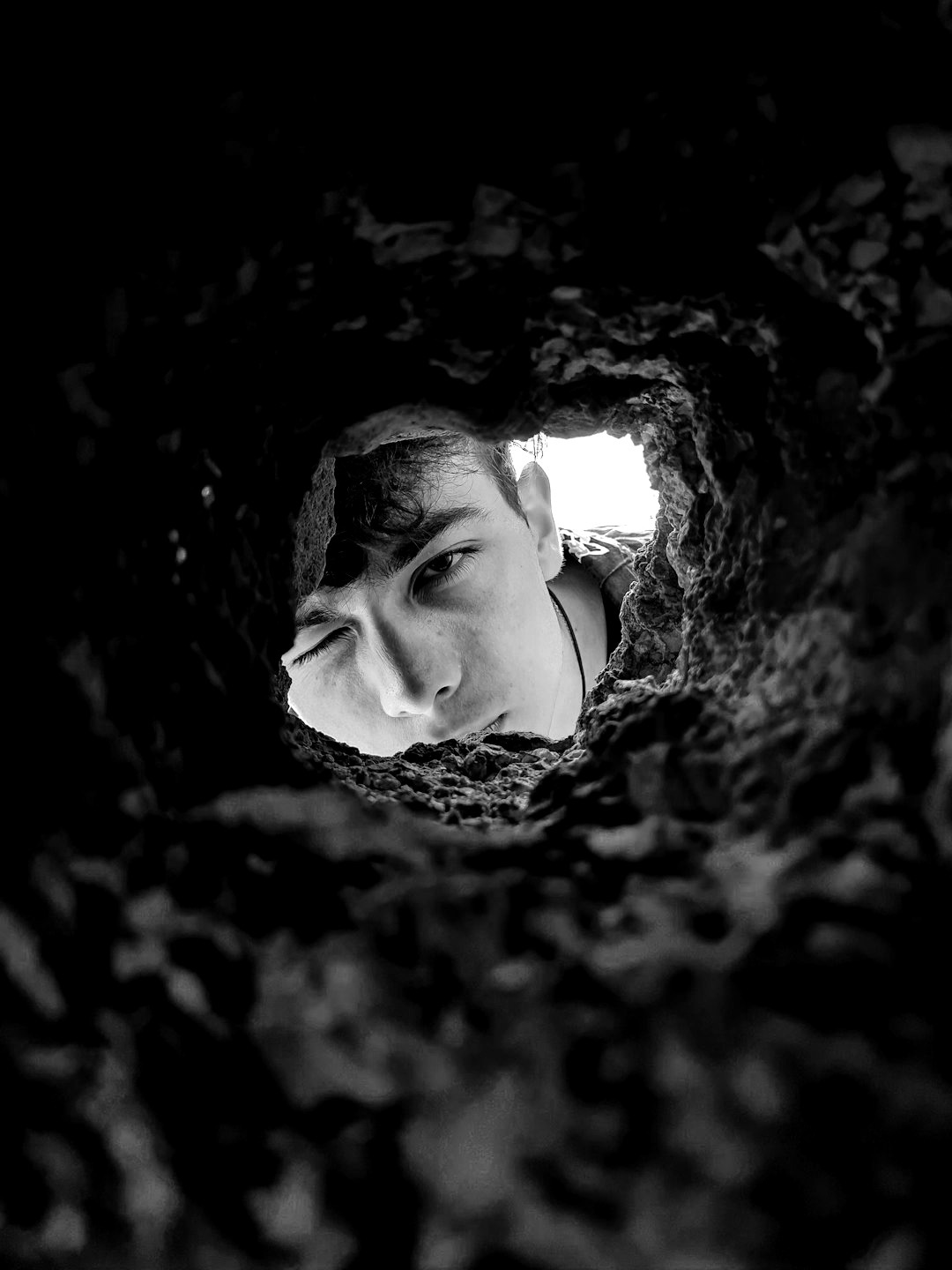
Unlike her namesake, Cassandra, my platonic soulmate since kindergarten, can’t see the future—but blindly believes it’s for the best. So, when The Hole manifested, she said, “I always did want to go spelunking.”
She was housesitting for a family vacationing in Iceland, their elderberries ripe. Cassandra had permission to take as many as she wished. We were picking them when it happened, our fingers purple. Bees circled the berries. I heard their buzzing more than the hum, but felt the hum, a melody in my bones, of the earth collapsing.
“I didn’t do it!” I shouted, nervous about the lawn.
“Look,” Cassandra said. She hovered over The Hole. She saw signs in everything, everywhere, the world a tool for divination. “There’s a way down.”
“No thanks on the hellhole,” I said, Googling spontaneous sinkholes.
“Loosen up, Olivia. It’s glorious.”
The Hole might be a metaphor, our story of it a parable. But we never did explore it, despite the tree roots forming a ladder down, or the flashlight Cassandra retrieved, or the plan we made for how long I would wait for her before I called for help, or my guilt making me cave in (pun intended) and say I would go down with her, or me anxiously begging her to change her mind, or the call we made to her boyfriend Jeff for his advice, or the twilight stretching to starlight, or the beer we drank for courage when we went back inside—because we passed out, and when we awoke The Hole was gone, perhaps a shared delusion, or some horrific fate we were spared.
But I came around to Cassandra’s belief that it was holy, that Hole, and she decided I had been right all along, it was nefarious, our missed opportunity for the best.
Naomi Blythe Gold is a witchy womanist residing in Minnesota. She was awarded a 2026 Voices Rising Fellowship at Vermont Studio Center where she’ll be writing her first novel, a tarot-inspired satire. She loves craft beer, burgers, and independent films.
Maybe this is a little rat reading too much into things, but I think the word "platonic" is like "the lady doth protest too much" and the narrator perhaps wishes otherwise.
And I love the language that balances both beautiful prose ("the twilight stretching to starlight") with relatability in dialog and thoughts ("No thanks on the hellhole.")